
Meet the Team!

Alice Stessman
Project Manager
Hi! My name is Alice and I am a third-year Statistics and Data Science major from California’s Central Valley. As the project manager, I was in charge of scheduling meetings, dividing tasks, and keeping us working on schedule. I also helped with cleaning the dataset and creating the website.
My favorite movie is The Grand Budapest Hotel!
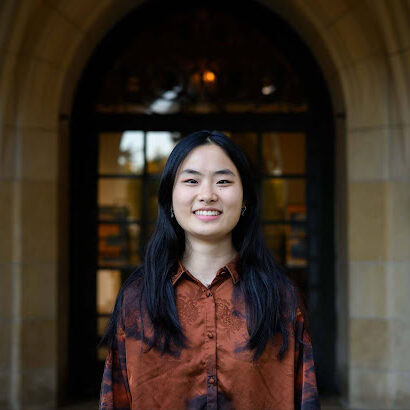
Bettina Wu
Content Developer
I’m Betting Wu, a third-year cognitive science student from Eugene, Oregon. As the content developer, I ensured the development of our site’s main narrative was cohesive through well-integrated data visualizations and maps.
My favorite movie is Mickey 17!
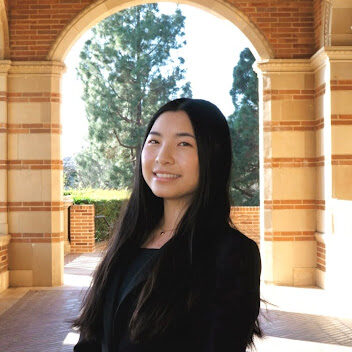
Sophia Xu
Data Visualization Specialist
I’m Sophia Xu, a third-year Statistics and Data Science student at UCLA from Sacramento, California. As the data visualization specialist, I was responsible for overseeing and fine-tuning the project’s data visualizations, as well as ensuring the data was formatted correctly.
My favorite movies are the Harry Potter films!

Jaden Nguyen
Editor
Hi! I’m Jaden Nguyen, a fourth-year student from Orange County UCLA majoring in Statistics and Data Science and minoring in Digital Humanities at UCLA. As editor, I was in charge of overseeing the consistency of the website’s quality.
My favorite movie is A Silent Voice!
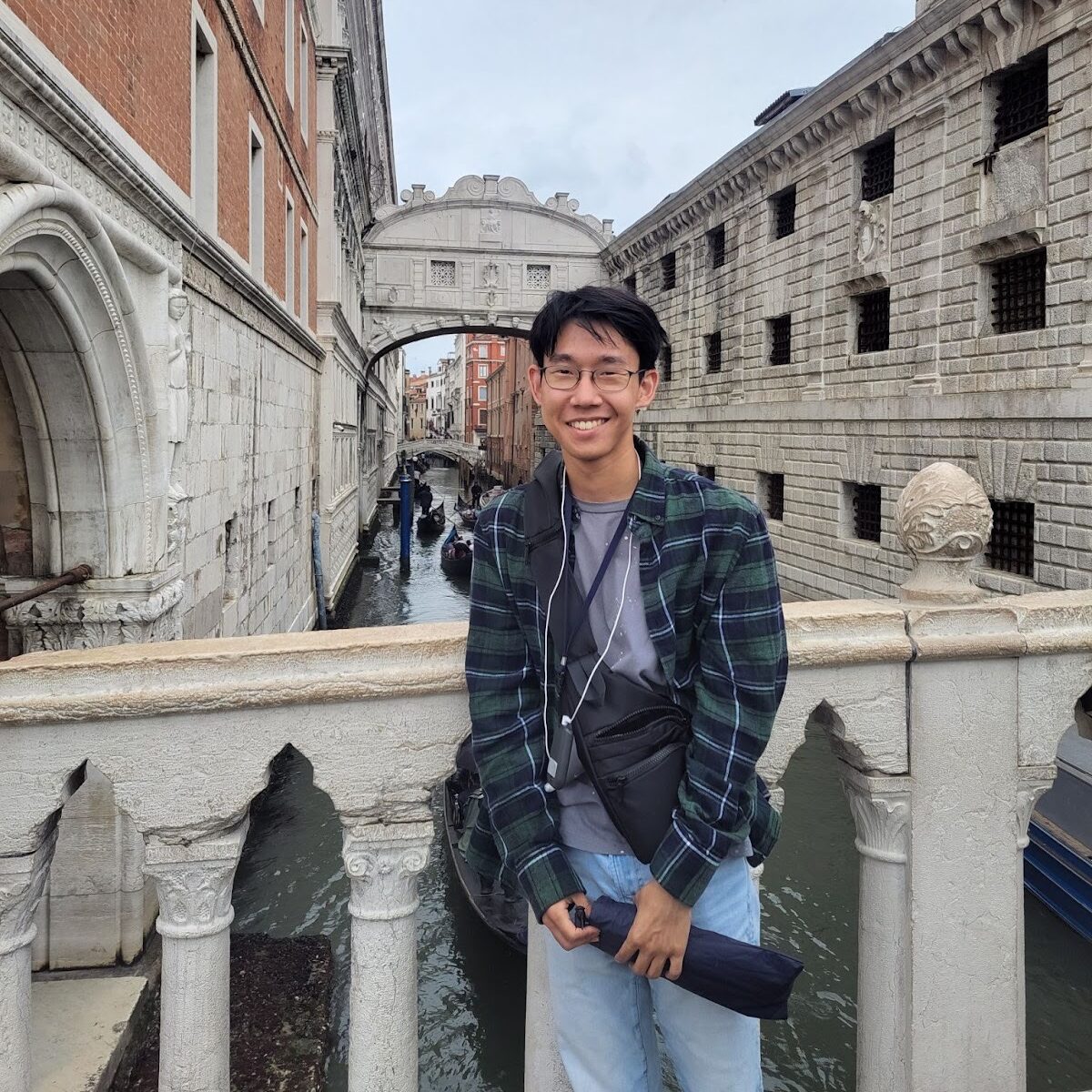
Ryan Yoo
Data Specialist
I am Ryan Yoo, a fourth-year at UCLA currently studying Statistics and Data Science at UCLA from Rancho Cucamonga. As the data specialist, I was responsible for verifying if the data is cleaned, usable, and well-formatted.
My favorite movie is Parasite!

Junhao Jia
Web Designer
I’m Junhao (Harley) Jia, a fourth-year UCLA student majoring in Statistics and Data Science and minoring in Data Science Engineering. As Web Designer, I was responsible for designing and organizing the website.
My favorite movie is Ready Player One!
Our Data
Sources
Our project focuses on representation in the Academy Awards put into context of the cultural and socioeconomic history of the film industry, as well as social, cultural, and political events happening throughout the United States. Disparities in acclaim in Hollywood across race, gender, and age is thankfully well-documented. Because of this, we were able to find numerous scholarly articles from credible sources and well-versed scholars delving deep into the topic. We found a plethora of sources exploring the history of the Academy Awards, discrepancies in representation, what patterns have arisen over time and any outside factors or industry standards that might have contributed. For example, there was a source in particular that investigated the “perfect age for an Oscar prize,” by determining the distributions of age for Academy Award winners in the acting categories (Alexandra-Ramona). An additional source discussed the “#OscarsSoWhite” social media movement which called out the Oscars for their lack of racial representation and thus motivated the institution to take steps to address its diversity problem (Bregel). Altogether, these sources combined with the other articles we have listed in our bibliography provided us with the multifarious perspectives we require to form a holistic understanding of the Oscar’s history with representation, particularly which groups have been historically marginalized and the steps taken to remedy that gap.
In addition, our team utilized various datasets to explore patterns in representation of Academy Award winners and nominees. Our primary dataset came from Kaggle, an online community platform which enables users to access and upload public data for practice and analysis. The dataset we used is a scrape of the Academy Awards database, the official, comprehensive online record of all Oscar nominees and winners, managed by the Academy of Motion Picture Arts and Sciences. This was then combined with an additional Kaggle dataset which provided demographic data, particularly the birthplaces and birthdates of select winners and nominees. With these two in conjunction, we were able to broaden the scope of our research to delve further into the spheres of influence that motivate the film industry.
For our timeline, we used a combination of primary and second sources. We sought to contextualize the Academy’s complex history with diversity, so we used online news outlets as secondary sources as they provided media perspectives on significant events at the Oscars.
Processing
The datasets we used were initially clean and easy to read but had some issues which required further processing. For instance, there was no information provided on the birth dates of the individuals tabulated nor their place of birth, which we felt would provide a more holistic understanding of the backgrounds of each winner and nominee. It was because of this reason that we ended up folding in a second dataset, but it did not provide this information for every person on the initial dataset, so still some gaps in the data that a more detailed investigation would ideally be able to bridge. In addition, the names of the awards were standardized, and any blank data points were replaced with ‘NA’ for uniformity reasons and to make them easier to process.
Our dataset could also have been more informative if it provided further details on the parentage of those nominated for awards. This could indicate how much of the industry was able to capitalize on nepotism or stronger socioeconomic standing to reach the success they achieved. While this may be less related directly to diversity, it might be valuable to understand the kinds of initial advantages provided to those who are successful in Hollywood. Information regarding salaries across acting categories for the project they were involved in could have also been helpful to understand the broader picture of representation in the film industry.
We used both Tableau and R to create data visualizations that are uploaded on our site. By focusing specifically on the Oscars, there were some advantages as we are able to hone singularly on prestige media without broadening too much, which could create some confusion, introduce large amounts of outliers, and present generalizations that are too wide.
Presentation
To create our website, our team was given access by UCLA to a HumSpace domain and used WordPress for website design. During our allotted discussion section time, we would meet to explore visual options and preferences for our project. We decided together that the opening image of the empty Dolby Theatre in Hollywood, where the Oscars are held, sets the tone for our website as it presents a stillness that is reminiscent of Academy Awards’ lack of momentum when it comes to diversifying. From there, we outlined what content we would include on each of the pages. Our group delegated each section to different team members to complete, and each person’s general contributions are outlined in the role indicated above. Naturally, there was more involvement on behalf of each party than strictly what is mentioned, but generally we tended to follow our assigned portions. After each member completed their individual work, we came together to edit the site as a team, make sure it was cohesive, and ensure that our points are clear. We implemented a red, black, and gold color scheme to emulate the regalia of the Academy Awards red carpet, as well as presenting some general count of Oscar nominees and ceremonies to posit the scale of the institution and its prestige.
Acknowledgements
We would like to thank our TA Kai Nham who guided us through data processing, our visualizations, and our website in very helpful discussion sections. You gave us an amazing quarter and were very patient as we were introduced to the first time to many of these tools. Thank you for being so helpful when we had questions and provided feedback that improved our project immensely!
We would also like to thank Professor Nicholas Sabo who taught us how to use WordPress, write narratives, and engage thoughtfully with Digital Humanities in biweekly lectures. Your instruction was interesting every week and we appreciate you for sparking our curiosity with this subject!